
What is whole-house repiping?
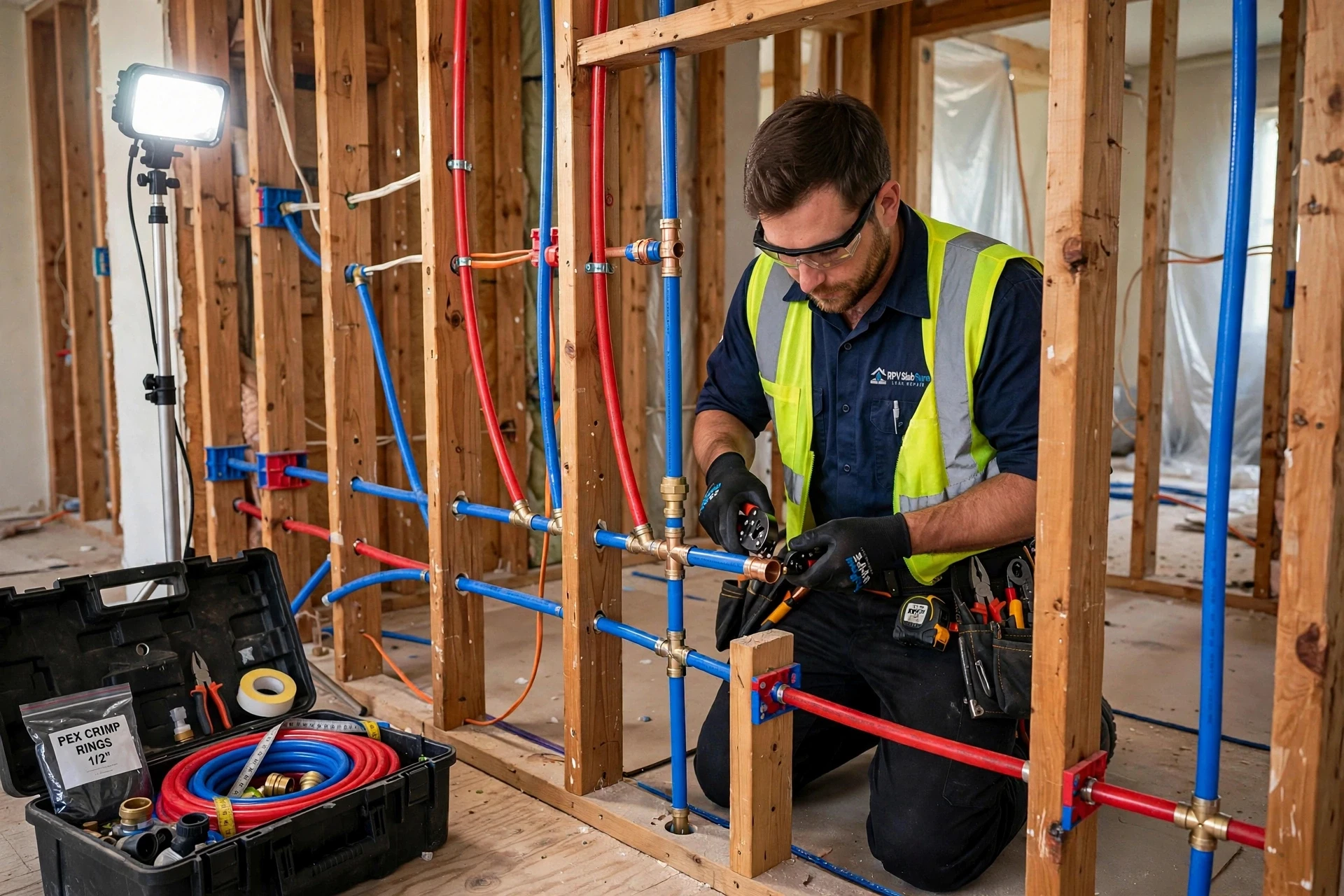
Whole-house repiping is the complete replacement of a home's water supply plumbing — every hot and cold line — with new pipe, typically PEX or copper. In the slab-leak context, it has one specific strategic purpose: the old copper lines buried in your foundation are abandoned in place, and an entirely new system is routed through walls, attics, and crawl spaces where it is accessible, inspectable, and serviceable.
This is fundamentally different from repairing a leak. A repair fixes a point of failure; a repipe retires the material that keeps failing. For Peninsula homes with original mid-century copper, the distinction matters enormously: pipe installed in the same era, in the same concrete, in the same soil, deteriorates on the same schedule. The Rancho Palos Verdes slab leak pros in our network recommend repiping when the pattern — not just the incident — points to systemic decline.
How a repipe actually works
Homeowners often imagine weeks of torn-open walls. The reality, with an experienced crew, is far more surgical.
PEX vs. copper: the material choice
PEX (cross-linked polyethylene) is flexible tubing that snakes through walls with minimal openings, resists both corrosion and freeze-cracking, and installs quickly — which is why it dominates modern repipes. Copper remains the traditional choice: rigid, time-tested over generations, and naturally antimicrobial. Both deliver excellent water quality when installed to code; the decision usually comes down to budget, home layout, and your contractor's recommendation for your water chemistry.
Where the new pipe goes
The new system bypasses the slab entirely. Lines run up through wall cavities, across the attic, and drop down to each fixture — kitchen, baths, laundry, water heater, hose bibs. The old under-slab lines are simply disconnected and left buried; they can never leak again because no water flows through them.
What the work looks like day to day
Crews cut small, strategic access openings in drywall — not gaping trenches — to route the new lines, then set fixtures and test the system under pressure. Most single-family repipes reach the pressure-test stage within a day or two. Water is typically restored each evening; your contractor should brief you on the daily shutoff schedule before starting. Patching the access openings is part of the job, and permits with final inspection close it out properly.
8 signs your home needs repiping, not another repair
Leaks keep coming back
The clearest signal: a second or third slab leak means the system is failing, not just a spot.
Rusty or discolored water
Brown or yellow tint, especially after the taps sit unused, indicates internal pipe corrosion.
Chronic low pressure
Corrosion and mineral buildup narrow old pipes from the inside, starving fixtures of flow.
Original mid-century plumbing
If your home still runs its original copper, the calendar alone argues for evaluation.
Visible corrosion on exposed pipe
Green patina, flaking, or crusty buildup where pipe is visible hints at what's hidden.
Knocking or rattling pipes
Water hammer worsens with age as supports loosen and walls thin — a stress multiplier.
Hot water arrives slowly
Scaled, narrowed hot lines delay delivery and waste water while you wait.
Repair bills compounding
When cumulative spot repairs approach replacement economics, the math has decided.
Why whole systems fail — not just single pipes
A single leak can be bad luck. A pattern of leaks is metallurgy and time. The copper in Peninsula slab homes faces a uniquely harsh retirement: embedded directly in alkaline concrete, surrounded by soil that stays damp near the coast, and carrying water whose minerals attack from within. Every inch of pipe from the same installation shares the same exposure — which is why the second leak so often follows the first within a couple of years.
Thermal cycling adds mechanical fatigue on top of chemical attack. Decades of expansion and contraction work joints and bends; water hammer from quick-closing valves sends shock waves through thinning walls. Hillside soil movement contributes its own slow stress. Individually, each factor is survivable for a while — together, across forty or fifty years, they convert a plumbing system from an asset into a maintenance treadmill. Repiping doesn't patch the treadmill; it steps off it.
How to tell if you're a repipe candidate
You don't need tools for this assessment — just observation and records.
- Count your leaks. One leak in ten years is an incident. Two or more is a pattern — the threshold where pros start recommending replacement.
- Inspect what's visible. Check exposed pipe at the water heater and under sinks for green corrosion, flaking, or dimpling — the visible pipe usually mirrors the hidden pipe's condition.
- Test your water's story. Fill a white bucket from a cold tap after the water sits overnight. Discoloration or sediment points to internal deterioration.
- Review the home's history. Original plumbing plus prior slab repairs is the classic repipe profile. Note it for your contractor consultation.
When facing a second leak, ask the contractor to price both a spot repair and a repipe. Seeing the numbers side by side — including the likelihood of future repairs — makes the decision rational instead of emotional.
A repipe project, step by step
Here's the sequence a professional crew follows, so you know what "a few days of work" actually contains.
-
01
Evaluation & plan
Fixture count, layout mapping, material selection, and a written scope — including the daily water schedule.
-
02
Permits pulled
The contractor handles city permits and schedules the required inspections as part of the project.
-
03
New lines run
Crews route PEX or copper through walls and attic with small strategic openings, setting each fixture line.
-
04
Pressure test & connect
The new system is pressure-tested, connected to the main, and the old lines are abandoned.
-
05
Patch & inspect
Access points are patched, the site cleaned, and the final inspection signs off the work.
What shapes the cost of repiping
Repipes are quoted per project after an on-site evaluation — these are the variables the estimator is weighing. Our cost guide explains how to read any quote you receive.
| Factor | Why it matters |
|---|---|
| Home size & fixture count | More bathrooms, longer runs, and additional fixtures mean more pipe and labor. |
| Stories & layout | Two-story homes and sprawling single-story layouts complicate routing. |
| Material choice | Copper material costs exceed PEX; both install to the same code standards. |
| Access conditions | Tight attics, finished basements, and limited wall access slow the crew. |
| Permits & inspection | City fees and inspection scheduling are legitimate project line items. |
When repiping becomes urgent
Repiping is usually a planned project — but it turns urgent when leaks won't stop. If you're shutting the main valve off between uses, if water damage is spreading faster than repairs can contain it, or if a leak threatens electrical systems, the timeline compresses from "this year" to "this week." Call for emergency assessment: the immediate leak gets controlled first, and the repipe conversation follows with a clear head.
Under emergency pressure it's tempting to approve the quickest patch. If the pattern says repipe, a rushed spot repair just schedules your next emergency — get both options priced before authorizing work.
Repiping FAQs
How do I know it's time to repipe instead of repairing?
The tipping point is usually the second or third leak — it signals system-wide deterioration rather than an isolated failure. Discolored water, chronic low pressure, and visibly corroded exposed pipe all support the same conclusion.
PEX or copper — which is better for repiping?
Both excel when installed correctly. PEX resists corrosion and freeze damage, installs faster, and costs less; copper is rigid, time-tested, and familiar to every plumber. Ask your contractor which suits your layout and water chemistry.
How long does a whole-house repipe take?
Most single-family repipes here finish in one to two days of active work, plus inspection scheduling. Water is typically restored each evening — confirm the daily shutoff plan with your contractor upfront.
Will repiping tear up my walls and floors?
New lines run through walls and attics via small strategic openings — the slab itself stays untouched. Patching those access points is part of the job; full repainting generally is not.
Does repiping require permits in Rancho Palos Verdes?
Yes — whole-house repipes generally require permits and inspection. A professional contractor handles the permitting process as part of the project.
Will a repipe stop slab leaks permanently?
It removes the cause: the new system bypasses the old under-slab lines entirely, so those lines can never leak again. For aging homes, it's the definitive end to recurring slab leak repairs.