
Slab Leak Tunneling Services in Rancho Palos Verdes, CA
Some leaks sit under floors you'd never want to cut — original hardwood, stone, a remodeled kitchen. Slab leak tunneling reaches those pipes from outside: we dig under the foundation, repair the line in place, and your interior never sees a jackhammer.
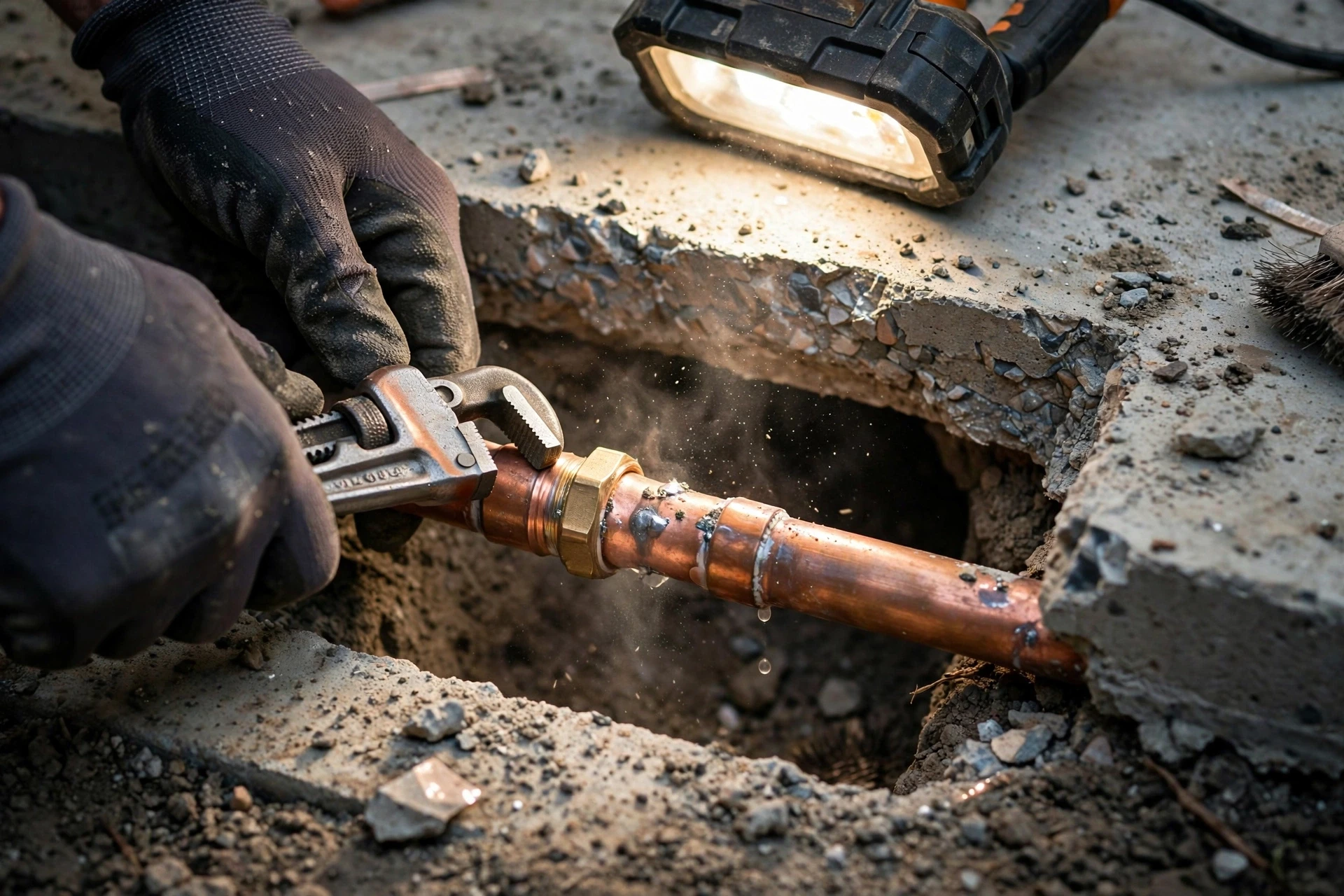
Under-Slab Access, Zero Demolition
What is slab leak tunneling?
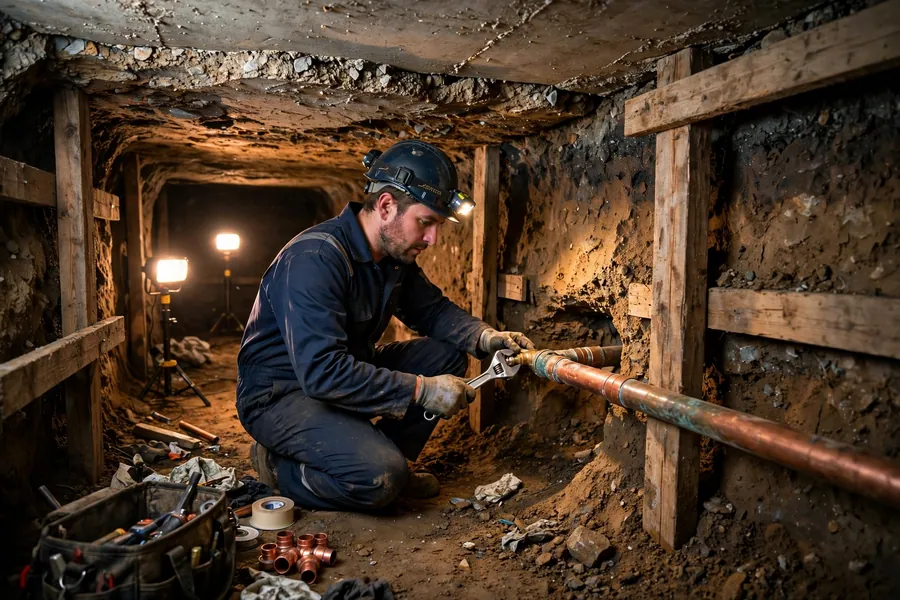
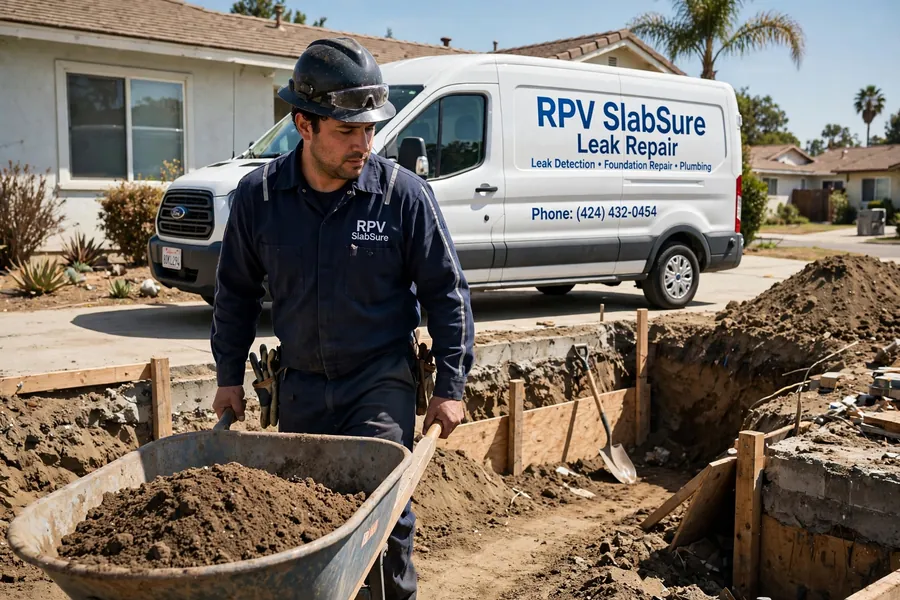
Slab leak tunneling is a slab leak repair access method: instead of cutting through your floor and foundation from above, a crew hand-digs a tunnel from an exterior entry point, passing under the slab to the exact spot where the pipe is leaking. Working inside the shored tunnel, the plumber repairs or replaces the damaged pipe section directly — the same quality of repair as a spot repair, reached from below instead of above.
Tunneling depends on precision. We start with slab leak detection to pinpoint the leak within inches, because the tunnel goes exactly there and nowhere else. When the repair passes pressure testing, the tunnel is backfilled in compacted layers so the foundation's support is fully restored.
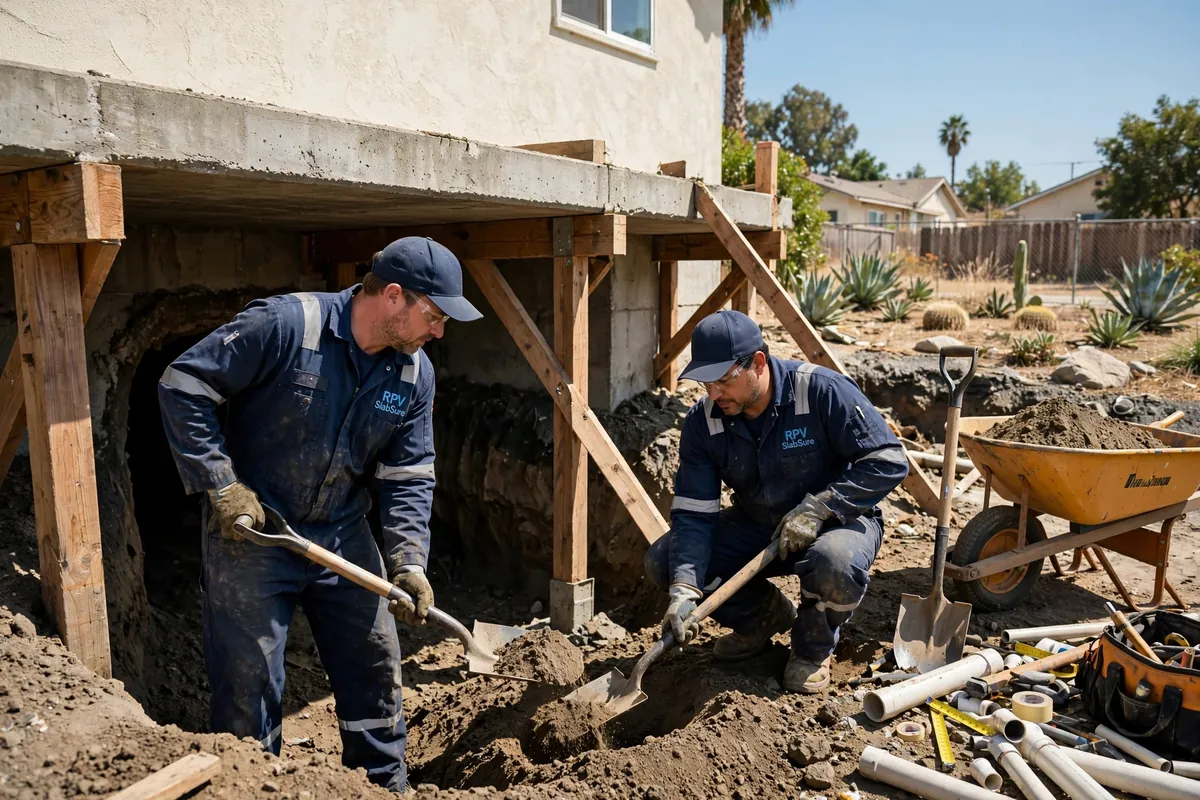
When Tunneling Wins
6 situations where tunneling is the right call
The leak is under irreplaceable flooring
Original hardwood, natural stone, radiant-heated floors, or a recent remodel — tunneling protects the finish you can't buy back.
The leak sits mid-home
Leaks near the center of the slab are the deepest dig from above — and often the shortest tunnel from the nearest exterior wall.
The slab is thick or reinforced
Post-tension and heavily reinforced slabs are risky and expensive to cut. Tunneling avoids the cut entirely.
You can't vacate the home
All work happens outside and underneath. No dust, no demolition noise inside, no sealed-off rooms.
The pipe itself is worth saving
When the line is fundamentally sound and only one section failed, tunneling reaches it without retiring the whole run.
Interior access is blocked
Built-ins, cabinetry, staircases, or slab additions above the leak make top-down access impractical.
Step by Step
How slab leak tunneling works: the five steps
- 1
Pinpoint the leak
Acoustic and electronic detection fixes the leak's position precisely — tunneling is surgical, not exploratory.
- 2
Plan the tunnel
We choose the shortest safe path from an exterior entry, check utilities, and plan shoring for each section.
- 3
Dig & shore
The tunnel is hand-dug in supported sections to working height directly beneath the leak — no unsupported spans.
- 4
Repair the pipe
The damaged section is cut out and replaced, joints are made up, and the line is pressure-tested from inside the tunnel.
- 5
Backfill & compact
Soil returns in mechanically compacted layers, restoring full support under the slab; the entry area is restored.
Honest Comparison
Tunneling vs. spot repair vs. rerouting
| Method | Access | Floors | Best when |
|---|---|---|---|
| Tunneling | Tunnel from outside, under slab | Untouched | Leak under costly floors or mid-home; pipe worth direct repair |
| Spot repair | Through floor & slab from above | Opened at one point | Leak under replaceable flooring near an edge |
| Pipe rerouting | New line via walls/attic | Untouched | The whole line is aging, not just one section |
Tunneling costs more in labor than opening a floor — its value is everything it doesn't destroy. If your flooring is builder-grade and the line is failing everywhere, rerouting may be the smarter spend; we'll lay out both numbers before you decide.
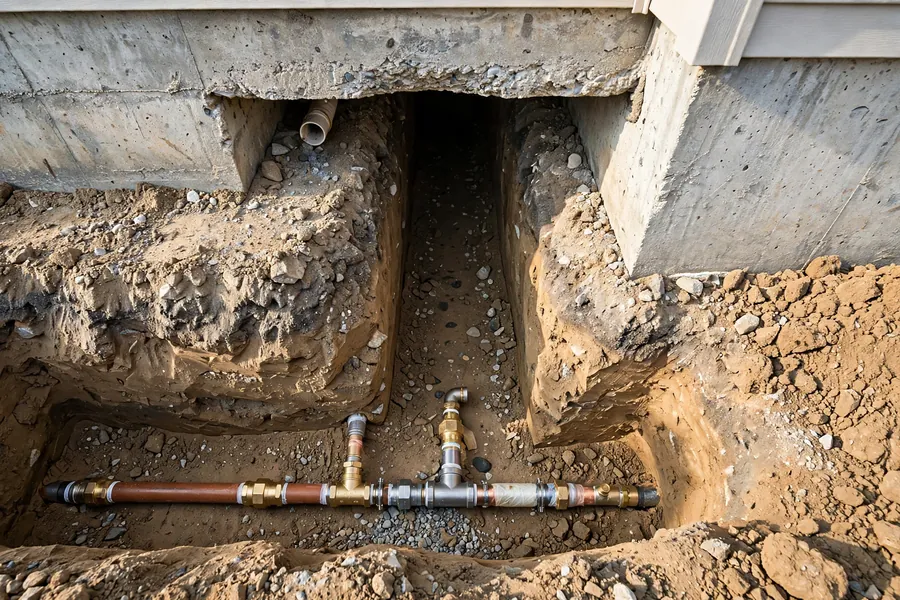
Local Knowledge
Tunneling on the Palos Verdes Peninsula
Peninsula homes make tunneling both valuable and demanding. Valuable, because so many Rancho Palos Verdes houses — from Los Verdes to Mira Catalina — sit on view lots with finished interiors their owners understandably protect. Demanding, because hillside soils here run from dense clay to fractured rock, and a tunnel has to be dug and shored with the soil that's actually there, not the soil a textbook assumes.
Local experience matters underground: knowing how Peninsula soils behave when opened, how to shore them safely, and how to compact backfill so a hillside slab keeps its support is the difference between a tunnel that disappears into the landscape and one that causes the next problem.
Pricing Factors
What shapes the cost of tunneling
- Tunnel length from entry point to leak
- Soil type — sand digs fast; clay and rock don't
- Depth of the pipe below the slab
- Shoring and safety requirements
- The pipe repair or section replacement itself
- Backfill, compaction, and site restoration
Near You
Tunneling across the Peninsula & nearby areas
RPV SlabSure Leak Repair is based at 6712 Los Verdes Dr, Rancho Palos Verdes, CA 90275, and we tunnel under slabs throughout the area: Palos Verdes Estates, Rolling Hills Estates, Rolling Hills, Torrance, Redondo Beach, Lomita, and San Pedro. Water actively leaking? Our emergency slab leak repair line answers 24/7 at (424) 432-0454.
Questions, Answered
Slab leak tunneling FAQs
What is slab leak tunneling?
Slab leak tunneling means digging a carefully shored tunnel from outside your home, underneath the concrete slab, to reach the leaking pipe directly. The plumber works in the tunnel to repair or replace the damaged section — and your interior floors are never opened.
Is tunneling safe for my foundation?
Yes, when it's done properly. Tunnels are dug in short, supported sections with shoring, the work area stays directly under the repair point, and afterward the tunnel is backfilled and mechanically compacted so the slab keeps full soil support. We never leave voids under a foundation.
How long does slab leak tunneling take?
Most residential tunnels in Rancho Palos Verdes are dug and repaired within one to three days, depending on tunnel length, soil conditions, and the repair itself. Peninsula soils with clay or rock layers can slow digging compared to sandy soil.
Will tunneling damage my yard or floors?
Your floors are completely untouched — that's the point of tunneling. Outside, we dig from one access area, keep spoil piles contained, and backfill and restore the dig site when the repair is verified. Landscaping at the entry point may need minor replanting.
How much does slab leak tunneling cost?
Cost is driven by tunnel length and depth, soil difficulty, and the pipe repair itself. Tunneling usually costs more than opening the floor directly, but less than replacing high-end flooring after a spot repair — see our slab leak repair cost guide for the factors, or call (424) 432-0454 for a quote.
Tunneling vs. breaking the slab — which is better?
Breaking the slab (spot repair) is faster and cheaper when the leak sits under replaceable flooring. Tunneling wins when the leak is under irreplaceable floors, in the middle of the home, or under a slab that's costly to cut and restore. We locate the leak precisely first, then recommend honestly between the two.
Stop the leak before it spreads
One call connects you with a local specialist — detection, honest repair options, and a fix matched to your home.
(424) 432-0454